EQUITY IN ACTION:
A Decade of Transforming Illinois Higher Education
Celebrating the Partnership for College Completion's Impact


The Partnership for College Completion launched in 2016 to address disparities in college access by race and income, and examine the persistent and widening racial and socioeconomic disparities in college degree completion.
Since its inception, PCC has ushered in a new–and urgent–conversation on higher education equity. As Illinois’ only policy and advocacy organization focused exclusively on postsecondary and higher education, PCC goes deep on the issues with the greatest potential for transformative impact.
None of PCC’s progress to date would have been possible without the extraordinary contributions of PCC’s talented staff–both past and present, the vision and support of current and former Board members, and the generosity of funders and partners.
PCC’s leadership has helped make Illinois a national model for higher education equity. From landmark legislation to campus reform, PCC’s impact can be seen in the policies, partnerships, and outcomes shaping opportunity for students statewide.
Since 2016, PCC has published 16 reports, which collectively included 89 policy and practice recommendations, 20 of which have been adopted by the state.
In 2018, PCC launched the Illinois Equity in Attainment (ILEA) Initiative, the first organized action of its kind. ILEA collaborated with a diverse group of 25 institutions to implement campus commitments to narrow equity disparities and increase student success, spurring dozens of reforms on campuses and at the state agency level.
PCC sponsored the historic Developmental Education Reform Act (DERA) within HB 2170. Signed into law in 2021, the bill maximizes students’ potential for success, and as a result, the share of students taking developmental courses has declined by half over the last eight years.
PCC has led the initial ideation, the proposal design, creation of a coalition to support, and introduction in the state legislature of a first-of-its-kind proposed funding formula for public universities.
See the full scope of PCC’s impact in Illinois higher education since its inception.
PCC fights for policies that protect students, expand financial aid, and hold institutions accountable to equity-driven change. Join us!
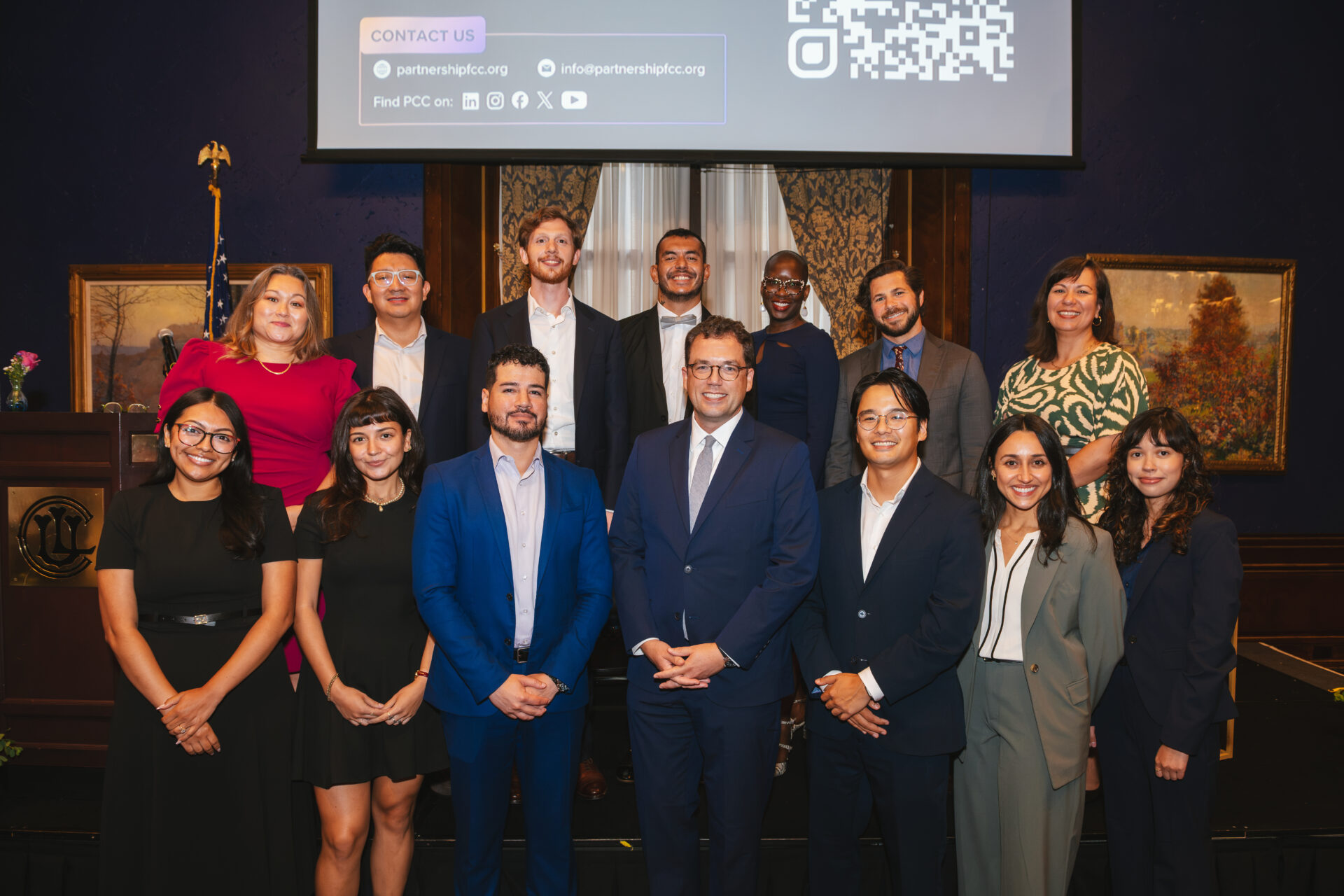
This year, PCC celebrated 10 years of advancing equitable college access and completion across Illinois.
In August, we invited advocates, partners, policymakers, practitioners, and students to join us in reflecting on our shared progress and looking ahead to what’s next.


Former PCC Executive Director
Dr. Lisa Castillo Richmond
PCC is laying the groundwork for even bigger wins in the future and that will…

Illinois State Representative
La Shawn K. Ford
As Chair of the House Higher Education Appropriations Committee, I understand that the rising costs…
In Illinois, PCC is the undisputed leader on state higher education policy, and a pivotal advocate and partner for racial and socioeconomic equity in higher education. Legislative leaders and policy stakeholders frequently request PCC’s guidance in developing and analyzing higher education policy issues.
PCC produces research and reports on equity in college degree completion in Illinois; college affordability for Black, Latinx, and rural students; regional disparities in postsecondary outcomes; and inequities and insufficiency in public higher education funding.
In turn, these reports are used to raise awareness and shape public discourse on equity in Illinois, and its research has directly informed policy and advocacy achievements.
This resolution required the state to consider disaggregating data and to look at student subgroups as part of its “60% attainment by 2025” goal, instead of just aggregating outcomes across all race and income groups.
SJR 41 created an inventory and analysis of all developmental education models offered in the state to identify reforms for improving student success in developmental education.
PCC led the legislation establishing the Student Parent Data Collection Act in 2021, which mandates the creation of a statewide report on the growing population of student parents at Illinois public colleges and universities that has reached 52,000 and their academic outcomes.
PCC played an instrumental role in establishing the Commission on Equitable Public University Funding through the passage of Senate Bill 815, which tasked the Commission with creating the funding model. The Commission’s efforts culminated in the release of a comprehensive report and set of recommendations in March 2024.
The Developmental Education Reform Act mandated two specific concepts: placement reforms and model scaling. The March 2021 passage of DERA marked an inflection point for PCC as an organization, as it not only developed the legislative proposal, but also leveraged its network of allies and champions in the state legislature to secure its passage.
PCC led the Child Care Assistance Program amendment to the Higher Education Student Assistance Act (SB 3149). After only two years of implementation, an estimated 350,000 MAP-eligible students have received information about child care assistance programs and federal dependent care allowances.
PCC led the introduction and passage of HB 2898. The bill required for-profit institutions found to have used deceptive or misleading practices and received MAP funds to pay back those funds to the Illinois Student Assistance Commission (ISAC).
PCC supported the Illinois Student Assistance Commission when it pushed forward a bill to expand the recipients for the Grant Program for Exonerees (SB3771). The legislation allows dependents of exonerees to receive a grant toward tuition and mandatory fees for up to two semesters per academic year for undergraduate or graduate study at Illinois public universities and community colleges.
For a decade, PCC’s legislative advocacy has been instrumental in reshaping Illinois’ higher education landscape, ensuring that equity is no longer an aspiration—but a measurable, actionable commitment embedded in state policy.
On Thursday, August 20, 2026, the Partnership for College Completion…
Read More
For a decade, the Partnership for College Competition has been…
Read More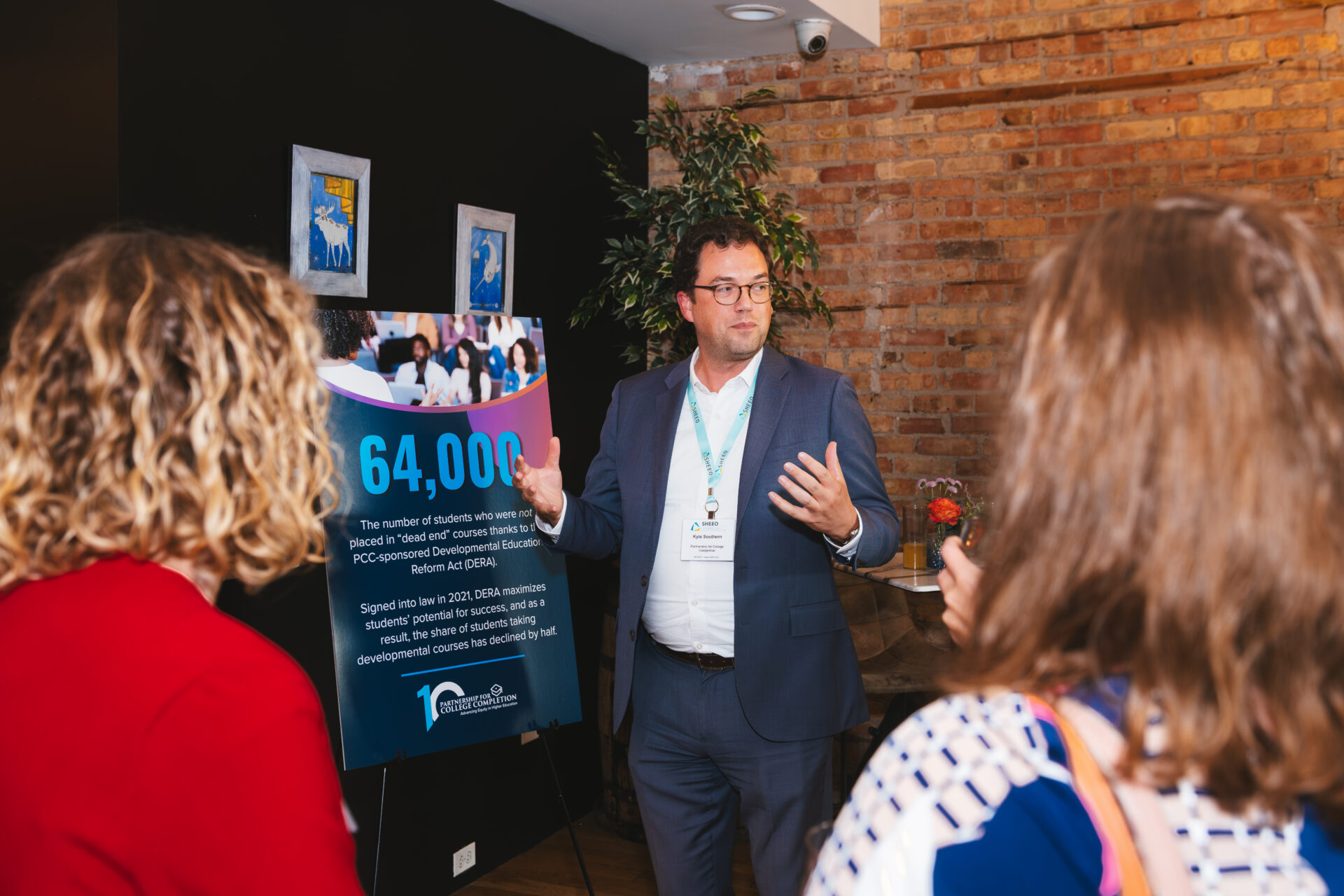
On Tuesday, August 4, 2026, the Partnership for College Completion…
Read More